
How To Photograph Frogs
Updated: Apr 9
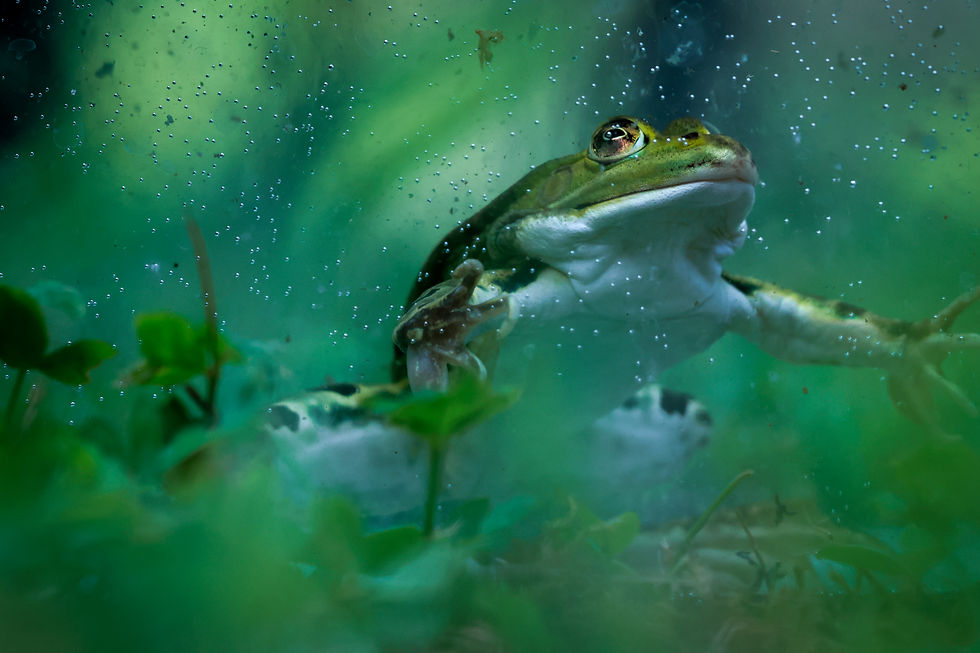
A few years back, I made my first attempt at frog photography in my garden pond, excited to capture their underwater world. Armed with a cheap compact camera, I soon learned that these amphibians were more curious than I'd anticipated—one eager frog even mistook my camera for a potential mate! This month, I came better prepared... So how did I get these shots, and how can you too?
Do It Yourself
To create split-level frog photos, gently lower a perspex tank into a shallow pond, ensuring no water gets inside. Hold your camera inside the tank, keeping the lens close to the perspex to capture both above and below the waterline.
What Lens is Good for Frog Photography?
For broader scenes, use a wide-angle lens to encompass more of the environment and focus on the water’s surface where the split occurs. Alternatively, a macro lens (used here) is ideal for focusing on fine details and capturing the silky-smooth water effect.
What Lighting is Good for Frog Photography?
Use natural light or soft, diffused lighting to minimise reflections and enhance detail. Be patient - wait for the frogs or other creatures to interact with their surroundings, then start capturing those incredible, dynamic shots.
Why Not Join Me on a Panama Frog Photo Tour?
One of the best places for frog photography is the rainforests of Panama, which offer bountiful opportunities to get up close to colourful dart frogs.
Whether you’re experienced or relatively new to wildlife photography, I’m happy to guide you with plenty of one-on-one tuition.


Want to see more photos like these? Click below to see my most recent images.
Comments